
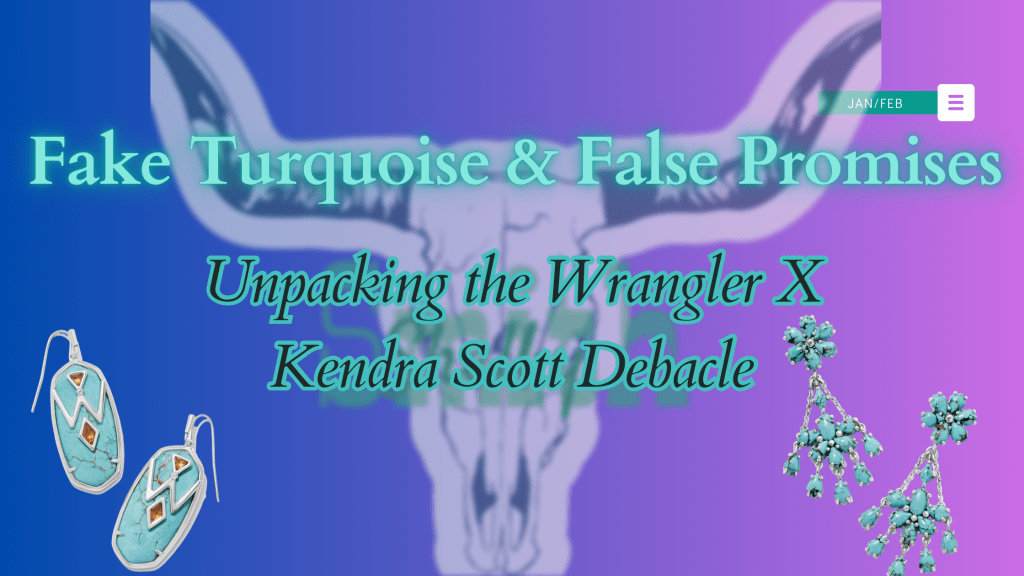
Wrangler and Kendra Scott, two names that are big in the western industry. What happens when these two brands come together to collaborate ? Controversial issues.
In the vast landscape of the fashion industry, whispers of controversy are nothing new. But when a beloved brand like Kendra Scott stumbles into a swirling dust cloud of misleading marketing and misrepresented materials, it’s enough to make any conscious consumer raise an eyebrow. The recent launch of the Yellow Rose Line in collaboration with Wrangler has sparked such a conversation, leaving a bad taste in the mouths of those who value authenticity and transparency.
At the heart of the issue lies the alleged misrepresentation of the turquoise stones adorning the collection. Promoted as “authentic turquoise,” these stones have been revealed by many, including seasoned gemologists, to be magnesite, a significantly cheaper and often dyed alternative. While magnesite itself isn’t inherently bad, the deliberate obfuscation of its identity raises ethical concerns.
Here’s why this matters:
- Misleading advertising: Claiming magnesite as “authentic turquoise” is simply inaccurate and potentially deceptive. It preys on the emotional resonance and perceived value associated with genuine turquoise, a stone deeply rooted in Native American culture and tradition.
- Eroding trust: Consumers trust Kendra Scott for its quality and craftsmanship. This misstep erodes that trust, leaving customers feeling duped and questioning the brand’s integrity. Especially when the price tag is in the high hundreds and you find out its costume jewelry quality with silver plated brass.
- Cultural appropriation: Turquoise holds immense cultural significance for various Native American tribes. Using the term “authentic” to describe magnesite in this context trivializes that significance and potentially appropriates cultural elements for commercial gain.
The fallout from this controversy is already evident. Social media is abuzz with disappointment and calls for accountability. Influencers are distancing themselves from the brand, and the potential for legal action looms.
Many influencers who know the issue are speaking on the issue itself. Some are quoting that the “Problem is not that it is howlite or magnesite, the problem is passing it off as authentic. The problem is taking away from small businesses and Native American Artists. The problem is big businesses profiting off of the name of those artists for their own financial gain.” -Anonymous
So, what should Kendra Scott do to mend fences? Here are some suggestions:
- Issue a transparent apology: Acknowledge the mistake, explain the reasoning behind the use of magnesite, and express genuine remorse for misleading customers.
- Offer clear labeling: If magnesite is to be used going forward, ensure crystal-clear labeling that accurately identifies the material. Transparency is key to regaining trust.
- Support the communities impacted: Consider partnering with or financially supporting organizations dedicated to preserving Native American culture and preventing its appropriation.
There is absolutely nothing wrong with fake turquoise. It is still just as beautiful. The problem is the lying and misleading people into thinking this is “authentic”. That is where the biggest issue lies.
Furthermore, this controversy serves as a stark reminder to brands that consumers are increasingly savvier and demand authenticity. Building trust takes time and sustained effort, while losing it can happen in a flash. Whether Kendra Scott can navigate this storm and emerge stronger remains to be seen. But one thing is certain: transparency, honesty, and respect for cultural heritage will be their guiding lights if they want to win back the hearts and trust that they’ve lost.
But Hold Onto Your Hats, Y’all: The Kendra Scott Rodeo Just Got Wild.
 Western Aesthetics Blog
Leave a comment